Network Topology


There are 5 types of network topologies:

  • Bus topology
  • Star topology
  • Ring topology
  • Mesh topology - (most common)
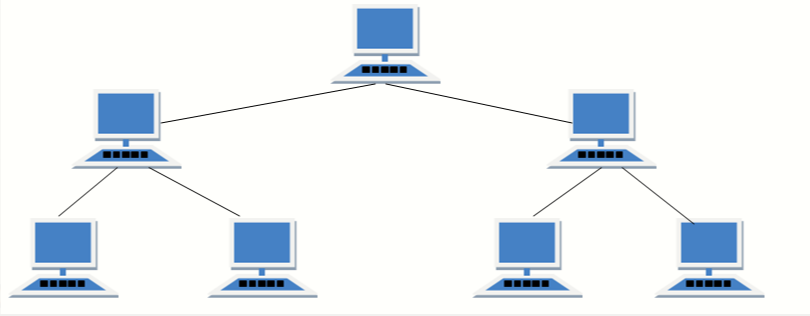
  • Tree topology - (least common)
Topology Diagram Advantages Disadvantages
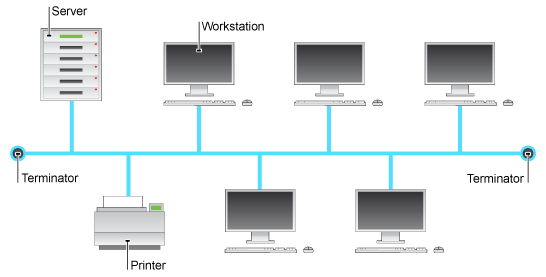
Bus
  • Works well when you have a small network.
  • It requires less cable length than other topologies.
  • It can be difficult to identify problems if whole network goes down.
  • Not great for large networks.
  • Terminators are required for both ends of main cable.
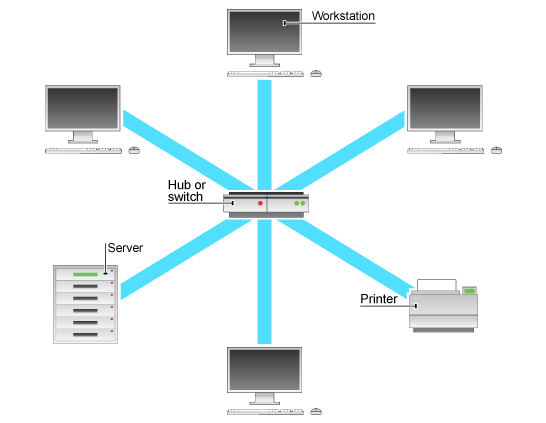
Star
  • Reliable - if one cable or device fails, then all others continue to work.
  • 0 to little data collisions.
  • Expensive.
  • It requires a lot of cable length.
  • If the central hub fails, every node in network fails!
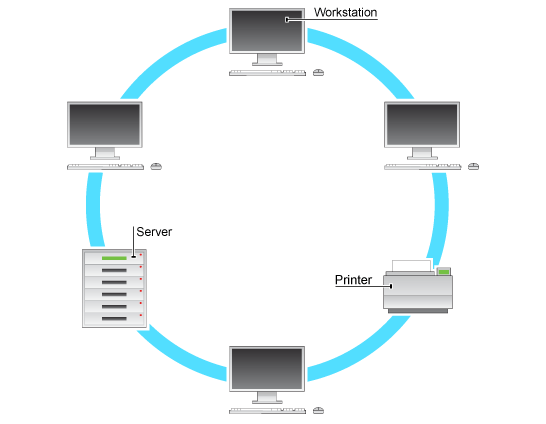
Ring
  • Data transfer is quick.
  • 0 to little data collisions.
  • If main cable fails, or any device is faulty, whole network fails.
  • Expensive.
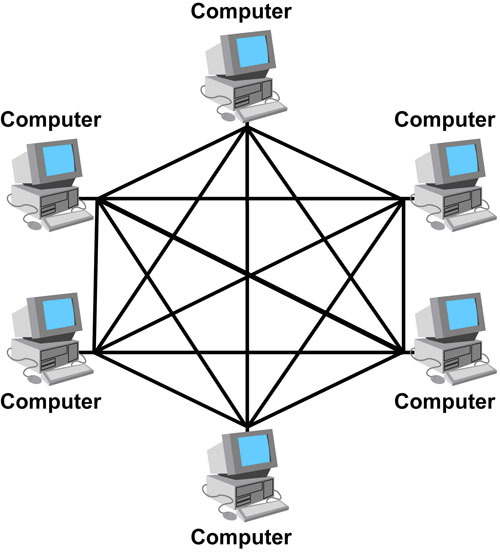
Mesh
  • If 1 of the connections goes down, there will be lots of other routes that can be taken to get to the same destination.
  • Expensive.
  • Requires the most cable of all topologies.
  • The more nodes you have, the bigger the NIC's become.
Tree
  • Scalable as leaf modes can accommodate more nodes in hierarchical chain.
  • Expensive.
  • Lot's of maintenance is required.
  • Backbone forms the point of failure.